Adsistor® Technology, Inc.

Home

Gasoline Petroleum Sensor

Corrosion Canary

Water Heater FV Sensor

Marine Gasoline Sensors

About Us

Adsistor® Corrosion Canary

Neutralize sour sump & tank before it becomes catastrophic UST corrosion.

Hardwired remote monitoring version available. Wireless coming soon.

Buy on Amazon here.


For sales inquires please contact Pat Dolan at (206) 368-9110 or pdolan@adsistor.com

• Sumps

• Diesel Tanks

• Coin Battery Powered

• Hardwired Remote Monitoring Version also Available

• Wireless Version Comming Soon

• Alarms at .02 mils (.5 microns) Corrosion Depth

• More Alarm Values Coming Soon 

• Intrinsically Safe

• 10 Year Field Life

• Not Affected by Gasoline, Diesel, Ethanol or Water

• -20 °C to 50 °C Operating and Storage Range

• Rugged, Impact-Resistant Construction


Q: Why should I install the Adsistor Corrosion Canary?

A: The Corrosion Canary alerts you when the conditions are right in your sumps and diesel tank for catastrophic corrosion, so you can take action to prevent it before it occurs and spreads.

Q: How does it work?

A: The Corrosion Canary relies on electronic resistance probe technology (ER) which has be used in the petroleum production and refining industries for decades.  Up until now ER has been too expensive for use in the petroleum dispensing industry.

Q: What is the alarm output?

A: A red blinking LED indicates the alarm state; or a +5Vdc signal if using the hardwired remote monitoring version.

Q: Does it alarm before corrosion begins?

A:  A small amount of microbial induced corrosion will occur on the sensor surface before it alarms.  The alarm threshold is equivalent to a corrosion depth of approximately 0.02 mils ( .5 microns ) on unprotected mild steel, which is barely detectable by the unaided eye.

Q: What if I want a less sensitive alarm threshold?

A:  Additional alarm thresholds are coming soon.

Q: What about false alarms from humidity, gasoline vapor, diesel vapor or temperature extremes?

A: The Corrosion Canary is not affected by any of these agents or by common benign rust.  It  only reacts to acidic vapors produced by microbes metabolizing ethanol and water.

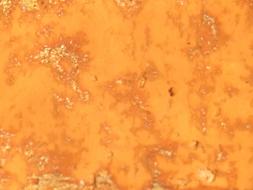
Common area rust will not cause an alarm.  Common area rust is caused by a slow oxidation process and does not penetrate deep into metal, or penetrates very slowly.  Common area rust is shown in the micrograph below on the right.

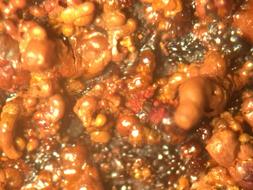
Microbial induced corrosion (MIC) is shown in the micrograph below on the left.  MIC is acidic so it penetrates rapidly and deep, eventually consuming all the metal.  MIC evolves hydrogen gas as a byproduct.  MIC can be identified by its hydrogen bubble residue, as seen in the micrograph on the left.


microbial induced corrosion, 40x
common rust, 40x ( does not cause alarm )

Q: Is it complicated/costly to install?

A: No.  It can be installed by hand in sumps and inside diesel tanks.  It attaches magnetically to tank manway covers or STP packer manifolds.  It has its own power source (3V coin battery) and is checked during sump inspections.

Q: What if I want continuous corrosion monitoring?

A: There is a hardwired version that can connect to an unused channel of most UST monitoring consoles. 

Q: How long does it last?

A:  The coin battery lasts 10 years.

Q: Is it reusable?

A: The Corrosion Canary can recover if removed from acid contaminated sumps and tanks if it has not been exposed to the acid environment for too long.  But we recommend that it be replaced after it has alarmed. 

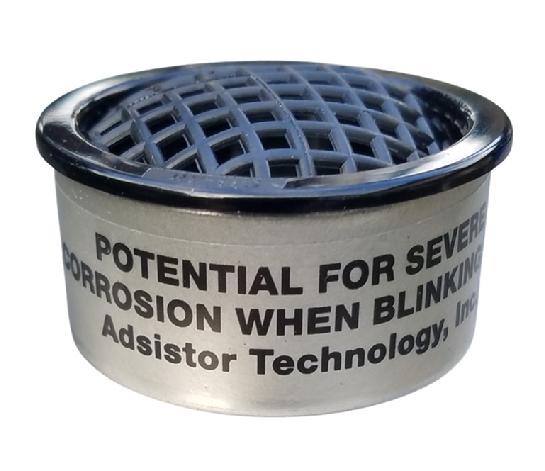
Q: What are its dimensions?

A: 1.0" x 1.5" dia.


How it Works
Electrical resistance corrosion probe technology (ER) is the petroleum industry’s gold standard for reliable, accurate sour gas corrosion detection at production and refining facilities. But it is expensive. Adsistor's innovative new sensor makes ER corrosion probe technology available to the petroleum dispensing sector at an affordable price.


The sensor’s surface is comprised of electrically conductive ferrous particles attached to flexible anchors. A magnetic field draws the particles into light physical contact with each other to form an electrically conductive path that is easily disturbed by microbial induced corrosion on any one of the particles. This causes an increase in electrical resistance across the sensor. The particles are passivated against ordinary common corrosion from moisture. The sensor only detects the corrosion caused by the acidic metabolites of microbes, which the EPA has determined are the main cause of structural corrosion damage to UST systems.

*patents pending

The Adsistor Corrosion Canary alerts you when microbes are metabolizing ethanol into acid in your sumps and diesel tank before corrosion starts and spreads to the rest of your UST system. The seals and threaded connectors in your sumps will eventually lose integrity causing trace amounts of product to continually contaminate your sumps. Likewise, sump covers and thru-wall seals will eventually let in moisture from the surface and backfill. Neither eventuality by itself poses a serious corrosion threat. But when they occur together, opportunistic microbes take advantage of the product ethanol content and the moisture to create a corrosive atmosphere which if undetected can lead to extensive damage. 

In its early stages microbial induced corrosion can be difficult to distinguish from benign general corrosion. What can look like a small patch of common rust now, may result in a nasty surprise at your next sump inspection. The Adsistor Corrosion Canary indicates when you have a potentially serious MIC problem so you can take action to save your STP and UST fittings and fasteners from aggressive corrosion.


INSTALLATION

1. The Adsistor Corrosion is light activated.  Therefore keep its lid in place until you are ready to install it.

2. The Corrosion Canary is magnetic and will stick to any ferrous surface in a sump.  Recommended locations to attach it are either on the STP packer manifold or on the tank manway cover.

3. Write the installation date in the place provided on the label.  Once you’ve magnetically attached the Sour Sump Alarm, remove the lid and discard it. The installation is now complete.

PERIODIC INSPECTIONS

1.  When you open the sump cover the ambient light will fall on a phototransistor switch and automatically power up the Corrosion Canary.

2.  If the Corrosion Canary starts blinking red then the Sour Sump Alarm has been exposed to conditions capable of causing substantial corrosion.

3. Replace the Corrosion Canary after 10 years or after it alarms, whichever occurs first.

PERFORMANCE TESTING

BATTERY TEST

To test the condition of the Corrosion Canary’s battery place 5 drops of liquid gasoline into a small, clean metal container such as a soup can.  Do not use a glass or plastic container or other frangible container.  Then place the Corrosion Canary into the container.  Place a cover on the container and wait for 30 seconds.  Remover the cover and check to verify that the LED is blinking red.  This indicates that the battery is still good.  Remove the Corrosion Canary from the container to fresh air. The LED will stop blinking within a few seconds and can be re-installed.  This test will not affect the normal operation of the Sour Sump Alarm.

HUMIDITY TEST

Demonstrates that the Corrosion Canary is not sensitive to high humidity.  Remove the Corrosion Canary's lid then place the Corrosion Canary in a container into which has been place enough liquid water to cover the bottom of the container.  Make sure the Corrosion Canary is suspended above the waterline.  Cover the container and place it in a dark place, preferably outdoors.  Check periodically over the next few days, months, etc. to confirm that the red LED remains off and never blinks.

CORROSION TEST

Warning: a corrosion test will end the operational life of the Corrosion Canary and it can no longer be installed for sump monitoring.  Demonstrates the Corrosion Canary's response to corrosive environments.  Place 1 liter of water in a 5 gallon plastic bucket. Add 5ml of acidic acid (equivalent to 100ml of vinegar).  Remove the Corrosion Canary’s lid and suspend the Sour Sump Alarm from the top of the bucket, above the waterline.  You can also suspend a test piece of unprotected mild steel in the bucket above the waterline.  Cover the bucket and place in a dark place.  The Corrosion Canary should start blinking red after 12 to 24 hours.  This test should be carried out between 40F and 80F.  When the Corrosion Canary first begins to blink red the corrosion on the test piece of mild steel should be barely detectable by the unaided eye and correspond to a corrosion depth of approximately .02 mils (0.5 microns).